AppReviewToday- AppReviews

  • Eldrum: Red Tide review

    Eldrum: Red Tide is a follow up to the enjoyable text-based rpg Eldrum: Untold. In classic sequel fashion, Red Tide ups the ante on the scope and scale of its adventure, but mostly ends up worse for it. By the end of Red Tide, I was more than ready to put it down.
    Reading to reunite

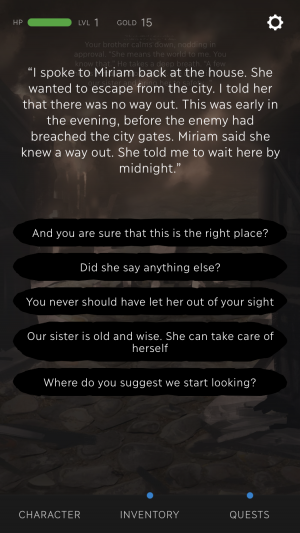
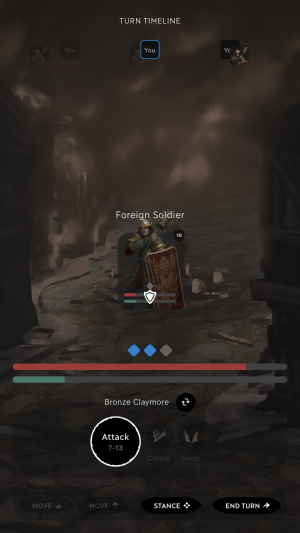
    This reading-focused rpg puts you in a fantasy world where your sister has gone mysteriously missing. You and your brother convene to discuss a plan for finding her (or if there is any reason to worry) when suddenly the town where you both serve as soldiers in comes under attack.

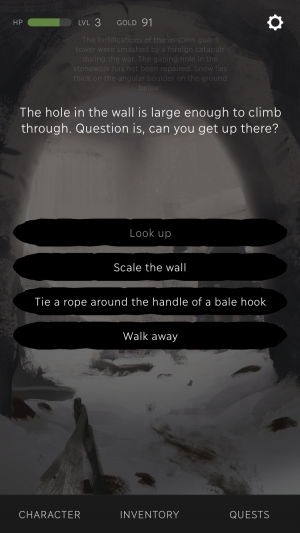
    This kicks off a long and arduous journey that includes doomsday cults, a slaving cartel, and a mysterious omen in the sky, among other things. Along the way you are constantly given agency in how to complete the quests set before you via dialog and action trees that let you approach situations from different angles, leverage your customized character strengths, and make use of special items you may have found along the way.

    Prose in need of personality

    As with Untold, Red Tide is really neat in how it manages to create an adventure that feels open and nonlinear despite being constrained to a text adventure. Red Tide opens up avenues even further by having more branching paths, side quests, and many opportunities to make decisions that have long-term consequences throughout the course of your journey.

    This expanded world does suffer under Red Tide's text-only format, though. Without any character portraits and perhaps some additional tools for pathfinding or knowing who is in certain locations, it becomes easy to lose track of what you're supposed to be doing and rather difficult to get back on track without good old trial and error.
    Saving through the slog

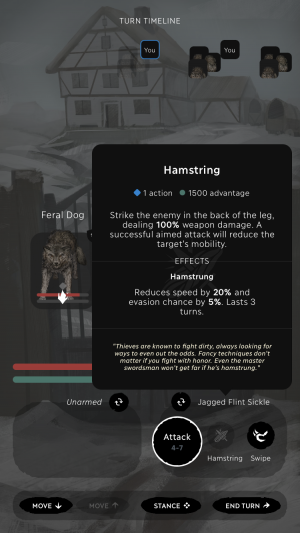
    Eldrum: Red Tide's openness also creates a lot of dead ends. Whether it's going into rooms that are rigged to kill you instantly or combat challenges you aren't strong enough to overcome, it's easy to find yourself facing a game over screen. Red Tide has a save system that retains your 30 most recent saves that you can roll back to and try things again. While it's nice that the game provides a system for getting out of sticky situations, it's not an ideal solution, and I honestly would have preferred a narrower adventure with less choice so I could move through the game a little more swiftly.

    Speaking of which, Red Tide is also a much bigger game than Untold, taking you to quite a few different open areas with their own quest lines. This multiplies the amount of dead ends or repetitive fights you get into, which balloons the playtime from reloading saves when you fail, to the point that once I reached the final act I was kind of over it. The story had some decent reveals but I spent too much time doing things that felt too similar to what I had been doing since the beginning of the game. Sure, some of my stats got better, but I never really felt a sense of progression or evolution so at a certain point I was just trying to barrel to the end to be done with it, as opposed to being compelled by what I was doing or reading.

    The bottom line

    I wrote in my review of Untold that this game format succeeds because of its restraint, and I stand by that. Red Tide has lost some of its ability to pull back, making for an experience that feels unweildy as a text-based rpg.

    Source link:https://www.148apps.com/reviews/eldrum-red-tide-review/
  • Unhappy Raccoon review

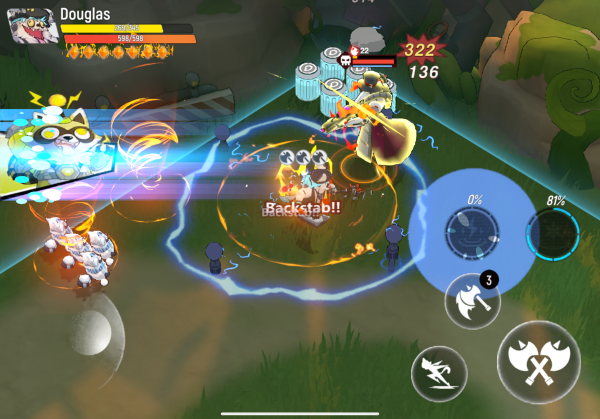
    XD Entertainment is getting a lot of attention for Torchlight: Infinite at the moment, but shortly before that game released, they also put out a free-to-play roguelite on the App Store. This game, known as Unhappy Raccoon, feels like a mashup of Torchlight: Infinite and Gunfire Reborn, but there are some rough patches in the experience that unfortunately keep it from being a truly satisfying experience.

    Raccoon roguelite

    Unhappy Raccoon has you choosing one a few anthropomorphic critter heroes to run through increasingly difficult dungeons full of traps and enemies. You can be a cheetah archer or a brutish canine, among other things, and each of these characters have specialized skills that give them unique combat options in these dungeons.

    On top of that, your character will also earn upgrades and gear throughout their adventure that may grant specific elemental infusions on their attacks, set bonuses that grant passive abilities like lifesteal, or even little companions that follow you around and help you attack and kill enemies. All of these upgrades come somewhat randomly from completing combat rooms, encountering shops, or defeating bosses, and you need to hone and develop your game knowledge to figure out winning combinations that work with your hero character and current build.

    Atypical action

    All of Unhappy Raccoon's action emulates that of classic isometric action rpgs, meaning you have an overhead view of your character that you have direct control over for movement and unleashing attacks and special abilities. The amount of things happening on screen at once can get quite chaotic, but Unhappy Raccoon never overloads you with too many active abilities to pay attention to, making it feel very manageable to play despite using touch.

    The primary appeal of Unhappy Raccoon is its incredibly varied systems of upgrades and gear. You don't have to get very far into a run to be able to make your character spawn tornadoes when they dash or have access to an ultimate ability that creates a ring of lightning, for example. Mixing and matching all of these powers is fun from both a novel and strategic standpoint, and each new run enables you to try out some new combination of these things.

    Rough rodents

    Unhappy Raccoon is totally competent at serving up its action roguelite action, but there are a few rough spots across the experience that can be off-putting. The first and most important thing of note is the game's free-to-play design. A lot of weapons and additional characters are only unlockable via in-app purchases, as are character skins, which can grant special abilities that default versions of said characters wouldn't otherwise have. This isn't the worst type of monetization, but it does mean that you only get to experience a subset of the game's main selling point if you choose not to spend money.

    The other big sore spot here is just how ramshackle a lot of Unhappy Raccoon's visuals and user interface are. Stylistically, the game looks pretty sharp, but every character model has literal rough edges and some menus extend beyond the limits of your screen. This kind of visual sloppiness ends up affecting some of the gameplay, too, where it can be hard to tell where you are aiming skill shots or if you are facing an object or enemy in a way that will let you hit it in the way you expect. None of these things make the game unplayable by any means, but they can lead to occasional frustrations.

    The bottom line

    There are a lot of neat ideas going on in Unhappy Raccoon, and for the most part they justify why you might wade through some of the game's messiness. With how it plays right now, I say it's definitely worth downloading to dink around in unseriously, as it can be easy to have a fun time doing that, but if you want to take on some of Unhappy Raccoon's harder content or explore its free characters, maybe wait to see if it gets some updates to make it a smoother experience first.

    Source link:https://www.148apps.com/reviews/unhappy-raccoon-review/