Temporal War review
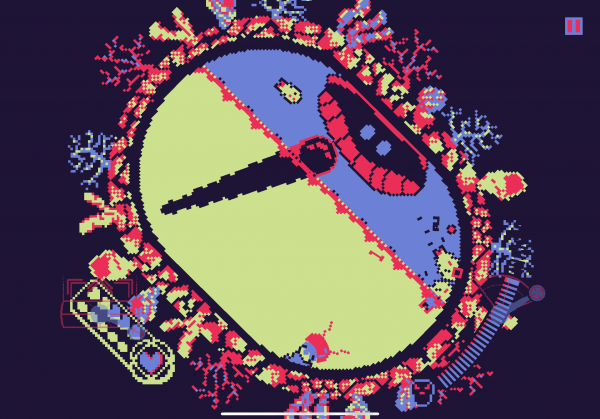
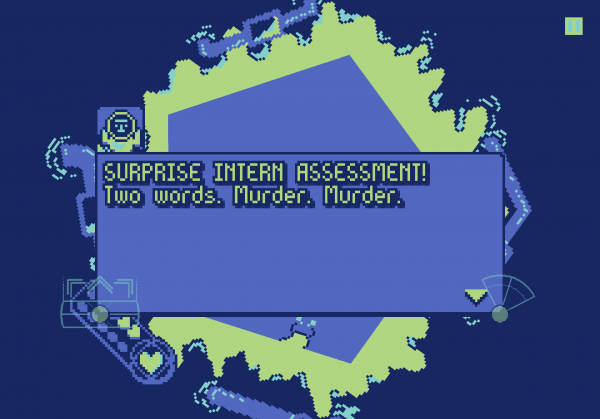
If you know anything about Game Stew as a developer, it's probably pretty surprising to see screenshots of Temporal War, their latest release. Outside of being released on iOS, it's a game that bears very little resemblance to their house style of somewhat surreal pixel art arcade titles. I am all for games going out on a limb to experiment and try to find new ways to engage and entertain players, but Temporal War feels like a huge miss as it seems to be relying wholecloth on randomness and what I suspect is AI-generated art to create its appeal.
Card war
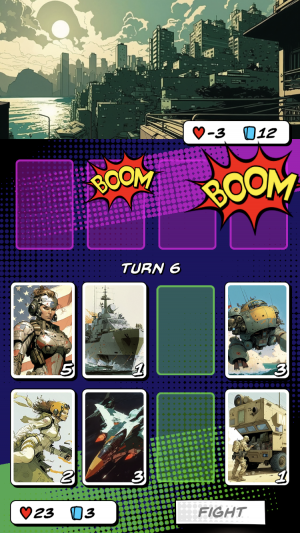
Temporal War is a card game themed around a very generic red army vs. blue army global conflict. Your role as the blue army commander is to fight back against the red army occupying forces in Taiwan through recruiting units (i.e. cards) that you use in customized decks to play a very simple tactical card battler.
Matches of Temporal War involve lane-based combat where cards across the play area from one another attack each other and deal damage based on the number value of the card. After each round of combat, a new card from each side's deck is deployed at random before you can arrange your units in lanes and attack once again. Combat encounters end when one side is able to punch through lanes of cards to deal enough direct damage to the enemy player and deplete all of their health points.
Random recruiting
There are some nuances to Temporal War's combat, like cards with special abilities and some random events that can affect both combatants in the heat of a battle, but probably the biggest gameplay twist the game has to offer is what I refer to as “card permadeath.” This is to say that if a unit from your deck gets defeated, that card is no longer available in your army any longer and you have to rely on other cards to keep your fighting forces strong.
This is a theoretically compelling idea for a card game, but it ultimately just ends up propping up a grinding mechanic. Winning fights rewards you with points you can use to draft new cards, all of which are randomly rewarded to you. Speaking of randomness, that seems to be a big throughline for Temporal War, and it ends up taking a lot of agency away from you as the player. There's a random system for getting new cards and a random draw to get the cards you want on the playfield, so all you are really left with in your control is how you choose to build your deck and how to rearrange whatever subset of them you draw for combat. This is to say that you aren't completely at the mercy of chance, but it plays what I'd say is way too much of a factor in the overall game.
Art-ificial
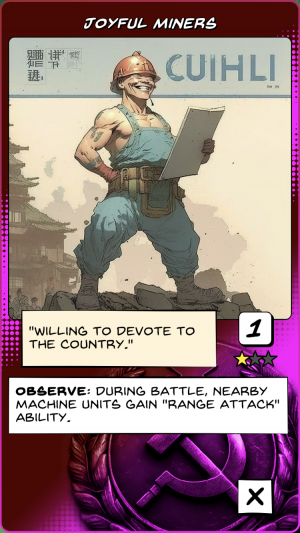
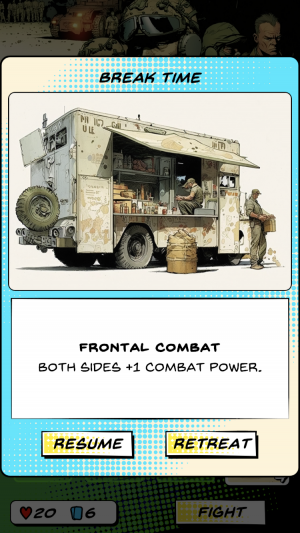
Casting aside Temporal War's mechanics for a moment, perhaps the biggest bummer about it is the game's overall style and presentation. Not only is its art lacking in the personality that oozed out of their previous titles, but all of it also looks… wrong.
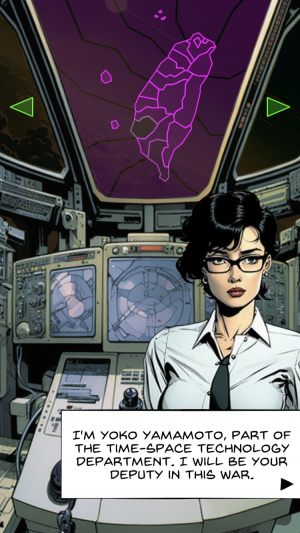
At first glance, the comic book illustrations look pretty sharp (though generic), but taking any longer look at any piece of art in the game immediately makes it read as AI-generated. There are drawings of planes that have helicopter rotors, radar huds that just have muddy nonsense shapes on them, and even the tutorial guide is a woman with a tie seemingly growing out from underneath her shirt and eyes that don't look in the same direction.
Now, I can't actually confirm if the art in Temporal War is AI-generated (Game Stew were very vague in their response to me when I asked them about it), but if it's not, it hews so closely to it that it is distracting and disappointing nonetheless. If it is AI-generated art, then I think there are dubious implications (at best) for this game to cost money. In any case, Game Stew lost a lot of what made their games stand out on the App Store in this shift in style, and it doesn't help that the game itself is somewhat middling.
The bottom line
Temporal War is a pretty generic and forgettable card game to the point that the most notable thing about it is how suspiciously AI-generated its art looks. Regardless of whether it is or not, this game feels like a step backward for one of the most dedicated and distinct developers still committed to mobile gaming.
Source link:https://www.148apps.com/reviews/temporal-war-review/