GrubDash Driver review
I think we can all agree the gig economy sucks, but GrubDash Driver is a game that goes out of its way to reinforce that point. This management game puts you in the shoes of a delivery driver trying to make ends meet and it is a grueling, soul-crushing experience in both concept and practice. Because the game is so painful to play, though, I'm not sure players might stick with it long enough to glean or appreciate anything about what it has to say beyond its initial (and rather obvious/agreeable) assertion.
Grueling gig
In GrubDash Driver, you play as someone who just lost their job and has to resort to working as a GrubDash driver. GrubDash is this game's fictional food delivery app that more-or-less acts the same way as services like GrubHub and DoorDash operate in real life. Individuals request orders through the app which then go to you, and you have to drive to establishments to pick up said orders and then deliver them to the person that requested them.
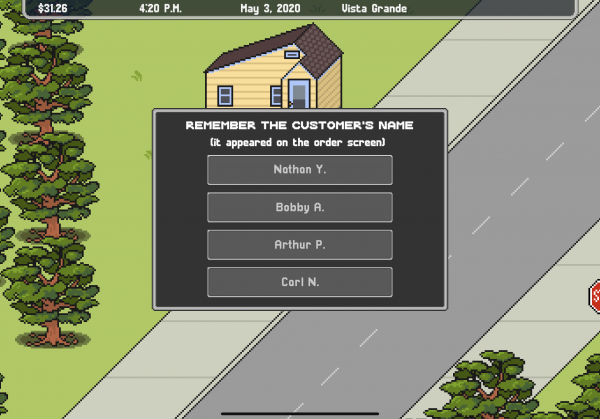
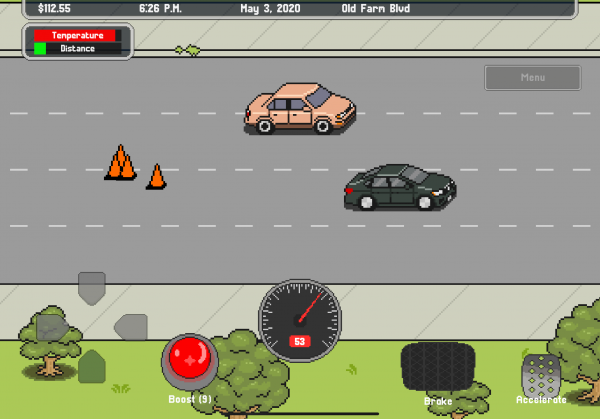
It's a job that is repetetive but requires a lot efficiency if you want to score tips or simply not be late with your delivery, and this is reinforced by nearly every single one of GrubDash Driver's mechanics. Every delivery starts with a push notification on your in-game phone, followed by a “getting ready” phase where you make sure you have everything you need before leaving the house. From there, you drive to town where you automatically find parking, but then have to wander through streets to find the correct establishment. After playing a “food pickup” mini game that determines the food's freshness rating, you then have to book it across town in a driving sequence that feels as unresponsive as it possibly can. Once in the neighborhood, you wander between houses reading addresses before dropping the order off at its final location, where you have to make small talk with the recipient before moving on to the next order.
In pursuit of perfection
GrubDash Driver is essentially designed to make you in a constant rush to try in an attempt to beat the clock. Delivery time windows are small, and no pickup or drop-off locations have consistent geography to allow you to rely on player knowledge to take shortcuts. When you first start out, you may consider yourself lucky to get food delivered at all, even though arriving early, maintaining freshness, getting client names correct, etc. can score you the coveted tips you need to really start earning any significant amount of funds.
These funds you then turn around and use on upgrades to make you marginally better at carrying out deliveries. There are also options to spend funds on paying down debt or upgrading your house, but those ends aren't tied to any gameplay systems and are almost treated as vanity expenses. As a result, there is heavy incentive placed on buying new cars that drive better or paying for upgrades that let your character read better, walk faster, etc.
Maddening messaging
I definitely appreciate the way that GrubDash Driver presents the idea of the gig economy as a driver. It is miserable even when you are finding success and it's outlandish to think anyone can simply optimize their way through it to create upward mobility. All that said, GrubDash Driver goes too far to make experience of playing it miserable while also allowing for optimization to occur that it seems to mix up the messaging it appears to be going for.
By making the process of delivering food absurdly difficult (and in some ways that don't make real sense) but offering the ability to purchase upgrades that ease that difficulty, GrubDash Driver seems to suggest that the gig economy is–in fact–something that can be gamed, even when designed to work against you at every turn. There's definitely enough written text in the game to communicate very clearly that the takeaway from this shouldn't be that you can succeed in the gig economy if you try hard enough, even though GrubDash Driver is precisely structured to reinforce that (misguided) belief.
The bottom line
GrubDash Driver is a maddening critique of the gig economy because it gives players goofy and terrible-feeling mechanics to illustrate the difficulty of the work while still granting rewards that you can freely reinvest into making the work easier to perform, netting you more profits. It's a strange way to try and communicate the struggle of the gig worker since it ultimately does allow for you to make meaningful career and life advancement so long as you put up with it for long enough.
Source link:https://www.148apps.com/reviews/grubdash-driver-review/