AppReviewToday- AppReviews

  • Torecower review

    It's hard to follow up on something great, and Torecower is trying to do just that. The second release from the publisher that brought the fantastic SNKRX to iOS brings a title that tries to apply a similar formula of the breakout hit to a tower defense game. It's neat, but it lacks a lot of the inventiveness that came from the original game's unique concept.

    Minimal mayhem

    Torecower is a roguelite tower defense game where you place weapons around a central point in an effort to protect it from enemies that fly in from the edges of the screen. Much like SNKRX, the look of all of this action is boiled down to basic shapes like circles and triangles that also have color schemes to help inform you what they do.

    Orange towers act as traditional gun-type towers, firing bullets in ways the resemble semi-automatic weapons, shotguns, rifles, and more. Blue towers fire projectiles in stranger ways or even loop them endlessly in circles around a fixed point. As these weapons kill incoming enemies, you also better be building yellow towers that collect the coins that fall out of them so you can continue building our your perfect defense.

    Unclear upgrades

    Between waves, Torecower pauses the action for a moment to let you spend a skill point in a preset upgrade tree that lets you make your existing towers more effective in some way. Some nodes on this tree do pretty straightforward things like upgrade damage for towers of a certain color or let you gather money faster, but some others it's not so easy to tell what their benefits are.

    Part of this is a relative lack of explanation on the game's part, but you also just need to experiment with why certain upgrades would be important given the defenses you are building. As you progress and sink more time into Torecower, you are better able to parse what these upgrades do, especially as some of them are reliant on unlocking new kinds of towers before they do anything useful for you.

    Every defense has weak points

    Torecower seems like it has a lot of potential in borrowing the color-coded upgrade system of SNKRX, but this system isn't implemented nearly as well. There is no auto-chess-like matching of tower types to gain additional bonuses. Without other dynamic or random elements to force you to change your strategy, games of Torecower largely play out very similarly every time you start a new run.

    It also doesn't help that Torecower has some odd bugs and control issues that can mess up runs. For example, if you purchase a tower but don't place it before a wave ends (a very easy thing to do as the game cannot be paused for building towers), that money disappears like you spent it but you are not given the chance to place the tower you bought. The tower placement controls are also really clunky, which can make this bug (and also just some strange tower placement in general) occur pretty often.

    The bottom line
    Torecower is reminiscent of SNKRX in many ways but is a lesser game in nearly every respect. Tamping down on the bugs and control issues could edge this game closer to something recommendable, though I do see little reason to play this game when a better, more well conceived title is already part of my game library.

    Source link:https://www.148apps.com/reviews/torecower-review/
  • The Centennial Case: A Shijima Story review

    I knew I was in for a pretty big experience when I downloaded all of the files for The Centennial Case and they totalled almost 15 GB. What I was not prepared for was just how wild of a ride I would be on. This FMV mystery game definitely puts its best foot forward, but some poor pacing and its own desire to fully explain every single interaction make playing large swaths of The Centennial Case pretty tedious.

    Crimes of the century

    The Centennial Case is a mystery FMV game that revolves around a young author who has been asked to untangle several different crimes and tragedies surrounding a mysterious family. She are brought into the fold specifically because of her ability to write compelling whodunnits, the thinking being that she can apply her logic from writing complicated mystery novels to try and solve some real-life murders.

    Not long into the investigation, things go sideways and more crimes occur, and it's up to you–using various dialog trees and some deduction-based puzzle solving–to get to the bottom of each and every crime and uncover the truth surrounding this family. To make it through each investigation, you'll need to gather some observational clues and look and listen closely to character interactions to pick up on hints about the case to reach the correct conclusions.

    Lengthy litigation

    To help teach you about how the game works, the first case in The Centennial Case is relatively straightforward and ushers you along with tooltips and advice from other characters. Despite this relative hand-holding, the game does a great job of keeping things thrilling as it keeps doling out peculiarities surrounding this family that create intrigue about how certain crimes are tied together and what certain people's ultimate motives are.

    In this early first case and the two or three that follow it, the way that crimes are laid out and the relations of the characters is all very clear, which makes the logical deduction sections of the game easy to navigate. In the back-half of the game, though, things get a lot more complicated and reveal the weaknesses of the game's UI. With the sheer number of scenes, characters, evidence, etc. the game really drags as it forces you to sift through this mountain of stuff to sort out the increasingly messy entanglements between characters, and it has a knock-on effect of making other aspects of the game that were once charming feel exhausting.

    Just 100 more things

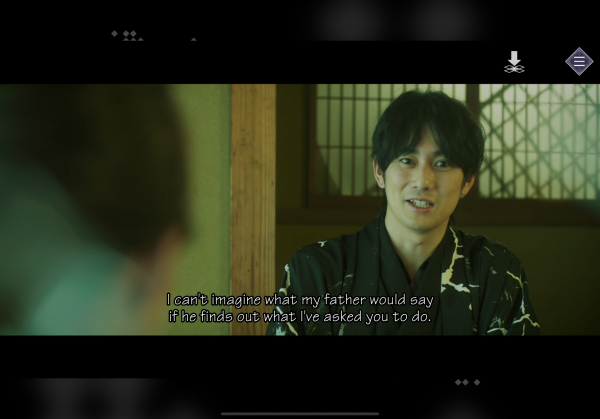
    There's almost always a kind of hokey and awkward aspect to the acting in FMV games, and the performances in The Centennial Case are no exception. If you play the game with English dubbing (as the original performances are in Japanese), this amplifies the effect. I knew to expect this, but what I wasn't necessarily expecting was how hard The Centennial Case would leverage that tone to tell its own soapy and melodramatic story. This thing seriously has more twists, turns, and surprise reveals than just about any mystery game I've played, and the stilted acting almost heightens the ridiculousness.

    That said, a big reason why The Centennial Case can fit so many surprises into its story is the fact that it has a lot of room for them. Just over the halfway mark of the game I thought I was in the final stretch, but the amount of things that you are tasked with figuring out in the final acts drag on and on and on. To make matters worse, some of the biggest surprises you can't possibly figure out based on the evidence alone so the game just railroads you into reaching those conclusions (and making all the sleuthing mechanics you're putting up with feel pointless as a result). The ride of the story is still entertaining, but it gets way too complicated and spends to much time trying to explain absolutely every little detail that I found myself just hoping that I'd reach credits by the end of a given scene.

    The bottom line

    The Centennial Case is certainly a meaty FMV mystery experience that can keep you entertained for a long time, but its complicated narrative and clunky gameplay definitely get harder to deal with over time. You have to have a high tolerance for FMV awkwardness and a lot of procedural explanations (which–while admirably thorough–make for a less appealing game) to truly appreciate it. And even then, certain things like pacing may still put you off of it.

    Source link:https://www.148apps.com/reviews/the-centennial-case-a-shijima-story-review/