AppReviewToday- AppReviews

  • Can You Stack & Crack Your Way Through These Challenging Puzzles?

    Stack & Crack ($0.99) by Jambav is a minimalistic puzzle game that looks simple at first but is intricate and complex. If you liked games such as Minimize, Cuzzle, and PUSH, then you'll enjoy Stack & Crack.

    Life's been getting a bit hectic for me, so I'm always looking to sit down and take a breather. When these times come, I usually end up pulling out my iPhone and playing a game to take my mind off things. My standard fare are puzzle games, of course, as they always prove to be rather relaxing yet stimulating at the same time. And even though I think I've gone through the majority of puzzle games that the App Store has to offer since I've been here at AppAdvice, I can't help but look for more. Stack & Crack is a new release this week that fits the bill of soothing yet challenging.

    $2.99

    minimize

    BorderLeap, LLC

    Free

    Cuzzle

    GalacticThumb Inc.

    $0.99

    "PUSH"

    Maciej Targoni

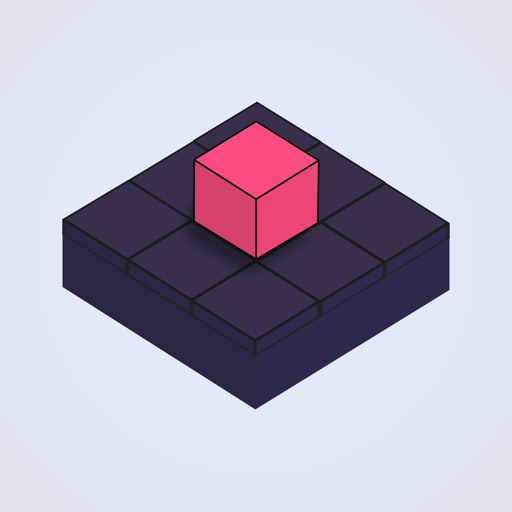
    In terms of visual design, Stack & Crack is beautiful. It features a simple and clean minimalist aesthetic that eliminates all extra fuss and is just enough for players to understand the core game mechanics. The game is rendered in 3D with a slightly angled, top-down perspective that's reminiscent of games like Monument Valley.

    The colors are a nice mix of dark and muted tones with brighter, more vibrant hues and they contrast with each other nicely. The soft glows and particle effects are calming, and animations are smooth and fluid. There are some "glitchy" line effects that remind me of Telepaint, which I thought was cool. So far, I've had no issues with lag or choppy frame rates on my iPhone 8 Plus. On top of it all, the ambient and atmospheric soundtrack is a delight to listen to, as it helps you focus on the puzzles in front of you.

    Like other puzzle games, Stack & Crack is based on levels. There are seven main chapters, which you can access after completing the "Learning to Stack" tutorial chapter. Each chapter has anywhere from 10 to 15 puzzles each, and they must be completed in linear order. However, you don't need to worry about time limits or move restrictions, because there aren't any, so there are no stars to earn. So you can play this game entirely at your own pace, which is nice.

    The goal in Stack & Crack is to get the "Boxies" to the Portal of Light, but they can only move in the direction that is indicated on the white strip that's on them. This means each Boxie can only move horizontally, vertically, or diagonally. So how is getting them all into the Portal possible? It's all about exploring the relationship between each Boxie, and then stacking them together to get to the final destination.

    Eventually, as you get through the chapters, you'll find new game mechanics that make the puzzles more elaborate, such as squares that flip the stack order, make them jump, swap them, and more. The chapter names give you an idea of what to expect, because the new elements are stated in their names.

    Controls in Stack & Crack are simple enough for anyone to pick up and play. To move a Boxie, just tap it and you'll see where it can move to, thanks to colored outlines that match the Boxie's color. Then tap the space you want it to go. In order to stack Boxies, you'll want to move another Boxie on top of another, making sure that the Boxie on the bottom is able to get to the Portal of Light. Boxies cannot be unstacked (unless there's a certain game mechanic), but there is an "Undo" button in the bottom right. You can undo as many times as you want, so make sure to use it.

    If you get stuck, Stack & Crack does have a hint system. Just tap on the small icon in the top right corner, and the solution to your puzzle gets revealed. However, the game only gives you two free hints with the initial purchase, and if you run out, you'll have to buy the $1.99 in-app purchase for unlimited hints. As someone who doesn't like IAPs in paid games, this irks me a bit, but it's completely optional.

    A minimalistic puzzle game about stacking four blocks.

    The Good

    Stack & Crack is a gorgeous and relaxing puzzle game that truly makes you think. I love the visual style because it's simple yet effective, and the music is soothing. The game concept is tried-and-true, but the intricate Boxie relationships is a nice twist, as well as the unique elements that get introduced at a gradual pace. There's plenty of content for the value, and the game runs smoothly.

    The Bad

    I love Stack & Crack so far. But again, I'm not a big fan of paid games that include in-app purchases, as I think you should get access to everything without having to worry about throwing away more money. I know that the hints are optional, but it's the principle.

    The verdict

    Overall, Stack & Crack is an enjoyable treat for any puzzle fan. The game has a distinctive and appealing graphical style, the music and sounds are charming and delightful, and the gameplay is simple yet complex at the same time. The controls work out well with no fuss, and the difficulty ramps up gradually so you don't feel overwhelmed too soon. This is definitely a game that any puzzle fan should have in their collection.

    Stack & Crack is on the App Store as a universal download for your iPhone and iPad for just $0.99. There are in-app purchases.

    8.9

    OVERALL

    Sound/Music 10

    Game Controls 9

    Gameplay 9

    Replayability 8

    Graphics 8.5

    $0.99

    Stack & Crack

    Jambav, Inc

    Source link: http://appadvice.com/reviews

  • Master Your Cards and Stop a Cycle of Destruction in Meteorfall

    Meteorfall: Journey ($2.99) by Eric Farraro is a deck-building roguelike that's surely hard to put down. If you enjoyed games like Card Thief, Card Crawl, and Miracle Merchant, then you'll love Meteorfall.

    Ever since I got into card games like Yu-Gi-Oh! and Magic: The Gathering in high school, I've grown a love for the genre that I still continue to this day. While those are trading card games, they've gotten me to dabble in other deck-building style video games, which I find to be a great way to pass the time when I'm bored. When Card Crawl came out a few years ago, I instantly fell in love because of the unique deck-building mechanic, as well as the roguelike elements, as I enjoy the challenges of roguelikes. From that moment on, I knew I would get a kick out of these types of games, so when I heard of Meteorfall a few months ago, I was eager to get my hands on it.

    $2.99

    Card Crawl

    Arnold Rauers

    $2.99

    Card Thief

    Arnold Rauers

    $1.99

    Miracle Merchant

    Arnold Rauers

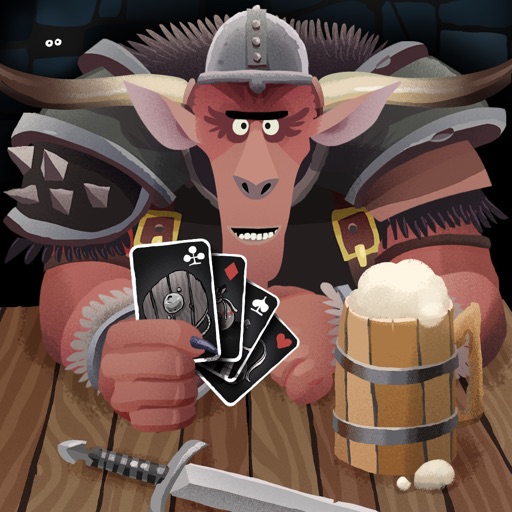
    Visually, Meteorfall has a quirky, yet charming, cartoon style to it that I love. The game is rendered completely in 2D, and the graphics are reminiscent of cartoons like "Adventure Time." Each of the playable heroes and the monsters they encounter have a unique appearance that's distinctive from each other. The colors in Meteorfall are bright and vivid as well, making it even more eye catching. The cards themselves are pretty plain looking, but have icons and symbols that are self-explanatory, for the most part. Animations are smooth and fluid, so there were no issues of lag on my iPhone 8 Plus. The soundtrack is rather subtle, as it more or less features the kind of sound you'd hear in a busy bar or tavern, but there is an acoustic guitar in the background. The sound effects are fun though, as the card noises are realistic, as well as the actions you do. In the end, we have a well thought out game that is ripe with personality.

    Since Meteorfall is a roguelike, that means that each new run has you starting from scratch. There are four different heroes that you can play as, and each one has their own play style. The Warrior (Bruno) focuses on physical attacks and setting up defenses. The Warlock (Greybeard) has heavy-hitting spells and ways to defend himself through magic. The Rogue (Mischief) relies on powerful single blows and hampering the foe. And the Priestess (Rose) has offensive spells and the ability to heal herself. One thing that all of them have in common, though, is the fact that they can all perform basic attacks, which deal the same amount of damage regardless, depending on the tier.

    Once you pick your character, you'll be able to choose between two random locations on the map. The areas that you get on this map are always randomized, so it's never the same thing twice. Each locale also has its own set of unique enemies to encounter as well, with a challenging boss fight at the end. There's a counter that indicates how many rounds until the boss fight.

    In each run, you'll have the option to engage in battle with the random encounters with foes. If you choose to skip the battle, you can regain health. Sometimes you will get other options, like a shop where you can buy new cards for your deck, or the blacksmith who can upgrade cards that you already have in your deck. There's temples where you can give up a card for buffs (while making your deck more efficient), as well as resting spots to fully heal and charge spells. And every now and then, you get a call-to-action where a scenario's presented, and you must make a tough decision, like sell a card to a random NPC, or sell your soul to the devil for an enhancement.

    As far as the battle system goes, it's pretty easy once you learn the basics. Battles are turn-based, and you get three action points per turn, meaning you can do one action per point before your turn ends. You get extra action points by leveling up or having cards that grant you more AP, but the default is three. Your deck is in the middle, and you'll see the top card of the deck. You can flick it right to use it, or left to skip it (a slow drag either way reveals a tooltip that explains what the card does).

    If you skip a card, you gain stamina. Most cards have a number in the top corner, which is the amount of stamina required to play that card. When you don't have enough stamina, you can't use it, and your only option is to skip it.

    Spell cards are different. Instead of using stamina, they have a number of charges, indicated by the dots in the corner. They don't cost stamina to cast, and can be activated as long as you have charges. The only way to recharge these spell cards is to use the "Meditate" card, or utilize a resting spot.

    There are also beige cards that don't cost charges or stamina, and are mostly found in the Warrior's deck. These cards are mainly to set up passive abilities, such as increasing damage dealt or getting shields up when you skip a card.

    With each vanquished foe, you'll gain experience points. Your health and stamina get refilled each time this happens, and you'll have opportunities for new cards to add to the deck, or increasing your health or stamina. But be careful — as you level up, your enemies do too. It's hard to beat bosses with this level scaling, but it can be done with careful planning and strategy, as well as understanding your hero's strengths.

    Once your health hits zero, it's game over. Your score is determined by the number of enemies defeated, fallen bosses, remaining gold, and if you beat the final boss (must clear three areas). You get gems depending on your final score.

    While Meteorfall is a roguelike, you can use those gems to unlock new cards for each character. These cards don't automatically get added to the deck (the cards you get are random each time), but if you unlock it, they become accessible when you open treasure chests or go into the shop. There are also main quests to complete, so these two elements are the only things that show progression in this roguelike.

    Meteorfall: Journey is a challenging roguelike card game that is simple yet in-depth with strategy and resource management.

    The Good

    Meteorfall is definitely a great little roguelike card game that stands out on the App Store. The game is charming with a quirky and delightful art style that reminds me of Saturday morning cartoons, and the sound design is amazing. The tutorial in the beginning is great for showing you the ropes, and after that, it's pretty hard to stop playing. The enemies can be tough and prove rather challenging, which is nice. I'm a fan of roguelikes, so I like that element of the game, but also appreciate the sense of progression through the cards you obtain with gems.

    The Bad

    While Meteorfall is an excellent game, it's not perfect. I think some enemies, especially bosses, are a bit too unbalanced, so I usually felt defeated already before the battle even begins. Some balancing tweaks could definitely make the game feel a little more fair, at least in my opinion.

    I also managed to beat the game once with the warlock already, and I think it felt a little short. Once you get the hang of the game, it's easy to get through the encounters and into the third area.

    The verdict

    I've been looking forward to Meteorfall for months, and I'm so glad that's finally arrived. The game is challenging and addictive, and holds a lot of replay value. Plus, the distinctive cartoon style visuals are delightful, and the sound design is excellent. Meteorfall is complex enough to require planning and strategy, but it's also quite accessible to anyone. This is definitely a game I'm keeping around for a while.

    Meteorfall is available on the App Store as a universal download for your iPhone and iPad for just $2.99. There are no in-app purchases.

    9.1

    OVERALL

    Replayability 9.5

    Game Controls 9

    Graphics 9

    Gameplay 9.5

    Sound/Music 8.5

    $2.99

    Meteorfall: Journey

    Eric Farraro

    Source link: http://appadvice.com/reviews