AppReviewToday- AppReviews

  • Tap Away to the Futuristic Tunes of Cytus II

    Cytus II ($1.99) by Rayark is a musical rhythm game that takes place in a futuristic world that's ruled by the internet. If you were a fan of the original Cytus, or Rayark's other music game, VOEZ, then you're sure to love Cytus II.

    Ever since my high school days, when Guitar Hero and Rock Band reigned supreme, I developed a love for music games. I would go to arcades and play the aforementioned games with friends, or watch others partake in Dance Dance Revolution (I'm not a dancer). I'd even venture out into other music games, such as DJ Hero and Beatmania. Even though I'm not an expert at rhythm games like other people I know, I have fun with them. My first Rayark music game was VOEZ, which I even bought on my Nintendo Switch, because it was that good. I didn't play the first Cytus game, though, but I was eager for something new from Rayark, so I decided to pick up Cytus II. As someone new to Cytus, I'm not disappointed.

    $1.99

    Cytus

    Rayark International Limited

    Free

    VOEZ

    Rayark International Limited

    Visually, Cytus II is incredibly impressive. If you're a fan of Japanese anime and manga, then you'll love the art style. The futuristic, cybernetic world looks like it came straight out of some anime series. The characters themselves have their own unique styles and aesthetics, and are incredibly well drawn, in my opinion. The digital world that everything takes place in is believable, with plenty of blues, grays, and neon lights to represent cyberspace. All animations are super smooth and fluid, so I did not get issues of lag or choppy frame rates on my iPhone 8 Plus. As a newcomer to the Cytus series, I'm definitely impressed by the graphics.

    Since Cytus II is a rhythm game, the soundtrack is rather important, even more so than the story. The game has a total of about 50 songs to play, with many of them needing to be unlocked through progression. Cytus II features songs composed by songwriters from all over the globe, including Japan, Korea, US, Europe, Taiwan, and more. These songs span all sorts of genres, including electronic, rock, and even classical. Your choice of songs to play also depend on which character you play as, giving you reason to try out other characters.

    One thing that should be mentioned, though, is the fact that while there are five characters total, you only get three with the initial purchase. The other two must be bought via in-app purchase, and they're $9.99 each. To me, that seems a bit high for a mobile game. So if you want to get access to all of the content in this version, you'll have to shell out over $20. A little steep for my tastes, but I digress.

    In Cytus II, there's an interesting story that unfolds through the music. You see, in the cyTus internet space, a mysterious DJ by the name of Æsir is charming everyone worldwide with his music. Turns out he's holding the first mega virtual concert, with an idol singer and popular DJ opening acts, so the frenzy begins. Everyone wants to see what Æsir looks like.

    The story unfolds through digital messages that users (other characters in the game) post, similar to forums like reddit. You'll be able to unravel the plot, get to know other characters through their replies and comments, and see what songs you've unlocked.

    Each song that you can play has a few different difficulty levels. By default, you start with Easy and Hard. But as you play, you can unlock Chaos difficulty, which is not for the faint of heart. But keep in mind that the higher the difficulty, the higher of a score you can end up with.

    Playing Cytus II is pretty easy, but takes some time and practice to get used to it. The game utilizes the "Active Judgment Line" rhythm play style, which means you must tap on the notes that appear as the judgment line hits them. There are five types of notes: regular blue ones need a tap, a circle that requires a long-press for a brief amount of time, an arrow that must be dragged, a bigger circle in the middle that needs a longer long-press, and double notes. While it's easy to tap them at the right time, things get harder when many notes appear on the screen at once, and it only gets more challenging with Hard and Chaos difficulties.

    Like any other music game, it's important to hit the notes at the right time, since you'll rack up a combo. The higher your combo, the more points you'll get thanks to the multiplier. And the closer to perfect you get on a song, the better grade you'll receive at the end.

    The grades are important, as you may unlock more songs by getting high marks on certain songs. The player you choose also gains experience points after successful performances. As they level up, the story advances, and new songs are unlocked as well.

    The futuristic world of Cytek returns with even more music rhythm gaming for you.

    The Good

    Cytus II has a lot of good things going for it. The art is gorgeous, everything runs smoothly, and the variety and choice in song selection is amazing. The story is also rather captivating and engaging, which is a plus, since you don't normally play music games for the plot. I've always enjoyed Rayark's sense of progression in the game, since it motivates you to try higher difficulties to unlock more content.

    The controls in Cytus II are also easy and intuitive. It does take some getting used to, but if you've played their music games before, or any rhythm game in general, then you'll feel right at home. I like the variety of notes that are in the game, as it keeps you on your toes.

    The Bad

    While I'm liking Cytus II as a newcomer to the series, I still think that the $10 price tag for the other two characters is a bit outrageous. However, that's my only qualm with the game, because everything else is pretty great.

    The verdict

    I'm enjoying Cytus II a lot so far, and it's definitely my new favorite musical rhythm game. I'm in love with the anime art style, and the music is quirky, upbeat, and catchy. The game's tutorial is helpful in terms of showing you what to do with each note type, and controls are simple. I recommend playing with your device on a table or other flat surface, so it's easier to see upcoming notes without your hands blocking your view. I just wish that the price for the other two characters were cheaper.

    I recommend Cytus II for anyone who likes music rhythm games, or was a fan of the original Cytus. You can find Cytus II on the App Store as a universal download on your iPhone or iPad for $1.99.

    9.4

    OVERALL

    Graphics 10

    Sound/Music 10

    Replayability 9

    Gameplay 9.5

    Game Controls 8.5

    $1.99

    Cytus II

    Rayark International Limited

    Source link: http://appadvice.com/reviews

  • Master Your Cards and Stop a Cycle of Destruction in Meteorfall

    Meteorfall: Journey ($2.99) by Eric Farraro is a deck-building roguelike that's surely hard to put down. If you enjoyed games like Card Thief, Card Crawl, and Miracle Merchant, then you'll love Meteorfall.

    Ever since I got into card games like Yu-Gi-Oh! and Magic: The Gathering in high school, I've grown a love for the genre that I still continue to this day. While those are trading card games, they've gotten me to dabble in other deck-building style video games, which I find to be a great way to pass the time when I'm bored. When Card Crawl came out a few years ago, I instantly fell in love because of the unique deck-building mechanic, as well as the roguelike elements, as I enjoy the challenges of roguelikes. From that moment on, I knew I would get a kick out of these types of games, so when I heard of Meteorfall a few months ago, I was eager to get my hands on it.

    $2.99

    Card Crawl

    Arnold Rauers

    $2.99

    Card Thief

    Arnold Rauers

    $1.99

    Miracle Merchant

    Arnold Rauers

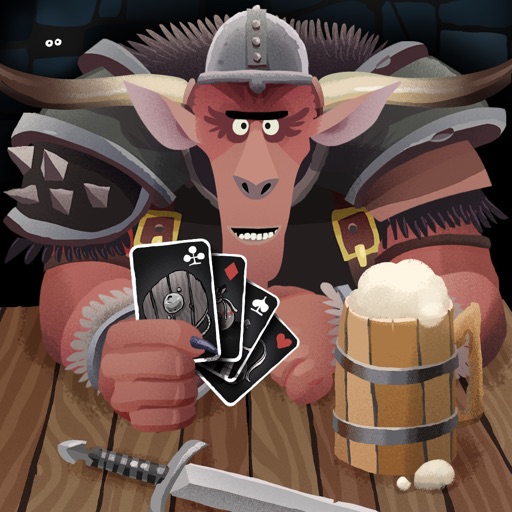
    Visually, Meteorfall has a quirky, yet charming, cartoon style to it that I love. The game is rendered completely in 2D, and the graphics are reminiscent of cartoons like "Adventure Time." Each of the playable heroes and the monsters they encounter have a unique appearance that's distinctive from each other. The colors in Meteorfall are bright and vivid as well, making it even more eye catching. The cards themselves are pretty plain looking, but have icons and symbols that are self-explanatory, for the most part. Animations are smooth and fluid, so there were no issues of lag on my iPhone 8 Plus. The soundtrack is rather subtle, as it more or less features the kind of sound you'd hear in a busy bar or tavern, but there is an acoustic guitar in the background. The sound effects are fun though, as the card noises are realistic, as well as the actions you do. In the end, we have a well thought out game that is ripe with personality.

    Since Meteorfall is a roguelike, that means that each new run has you starting from scratch. There are four different heroes that you can play as, and each one has their own play style. The Warrior (Bruno) focuses on physical attacks and setting up defenses. The Warlock (Greybeard) has heavy-hitting spells and ways to defend himself through magic. The Rogue (Mischief) relies on powerful single blows and hampering the foe. And the Priestess (Rose) has offensive spells and the ability to heal herself. One thing that all of them have in common, though, is the fact that they can all perform basic attacks, which deal the same amount of damage regardless, depending on the tier.

    Once you pick your character, you'll be able to choose between two random locations on the map. The areas that you get on this map are always randomized, so it's never the same thing twice. Each locale also has its own set of unique enemies to encounter as well, with a challenging boss fight at the end. There's a counter that indicates how many rounds until the boss fight.

    In each run, you'll have the option to engage in battle with the random encounters with foes. If you choose to skip the battle, you can regain health. Sometimes you will get other options, like a shop where you can buy new cards for your deck, or the blacksmith who can upgrade cards that you already have in your deck. There's temples where you can give up a card for buffs (while making your deck more efficient), as well as resting spots to fully heal and charge spells. And every now and then, you get a call-to-action where a scenario's presented, and you must make a tough decision, like sell a card to a random NPC, or sell your soul to the devil for an enhancement.

    As far as the battle system goes, it's pretty easy once you learn the basics. Battles are turn-based, and you get three action points per turn, meaning you can do one action per point before your turn ends. You get extra action points by leveling up or having cards that grant you more AP, but the default is three. Your deck is in the middle, and you'll see the top card of the deck. You can flick it right to use it, or left to skip it (a slow drag either way reveals a tooltip that explains what the card does).

    If you skip a card, you gain stamina. Most cards have a number in the top corner, which is the amount of stamina required to play that card. When you don't have enough stamina, you can't use it, and your only option is to skip it.

    Spell cards are different. Instead of using stamina, they have a number of charges, indicated by the dots in the corner. They don't cost stamina to cast, and can be activated as long as you have charges. The only way to recharge these spell cards is to use the "Meditate" card, or utilize a resting spot.

    There are also beige cards that don't cost charges or stamina, and are mostly found in the Warrior's deck. These cards are mainly to set up passive abilities, such as increasing damage dealt or getting shields up when you skip a card.

    With each vanquished foe, you'll gain experience points. Your health and stamina get refilled each time this happens, and you'll have opportunities for new cards to add to the deck, or increasing your health or stamina. But be careful — as you level up, your enemies do too. It's hard to beat bosses with this level scaling, but it can be done with careful planning and strategy, as well as understanding your hero's strengths.

    Once your health hits zero, it's game over. Your score is determined by the number of enemies defeated, fallen bosses, remaining gold, and if you beat the final boss (must clear three areas). You get gems depending on your final score.

    While Meteorfall is a roguelike, you can use those gems to unlock new cards for each character. These cards don't automatically get added to the deck (the cards you get are random each time), but if you unlock it, they become accessible when you open treasure chests or go into the shop. There are also main quests to complete, so these two elements are the only things that show progression in this roguelike.

    Meteorfall: Journey is a challenging roguelike card game that is simple yet in-depth with strategy and resource management.

    The Good

    Meteorfall is definitely a great little roguelike card game that stands out on the App Store. The game is charming with a quirky and delightful art style that reminds me of Saturday morning cartoons, and the sound design is amazing. The tutorial in the beginning is great for showing you the ropes, and after that, it's pretty hard to stop playing. The enemies can be tough and prove rather challenging, which is nice. I'm a fan of roguelikes, so I like that element of the game, but also appreciate the sense of progression through the cards you obtain with gems.

    The Bad

    While Meteorfall is an excellent game, it's not perfect. I think some enemies, especially bosses, are a bit too unbalanced, so I usually felt defeated already before the battle even begins. Some balancing tweaks could definitely make the game feel a little more fair, at least in my opinion.

    I also managed to beat the game once with the warlock already, and I think it felt a little short. Once you get the hang of the game, it's easy to get through the encounters and into the third area.

    The verdict

    I've been looking forward to Meteorfall for months, and I'm so glad that's finally arrived. The game is challenging and addictive, and holds a lot of replay value. Plus, the distinctive cartoon style visuals are delightful, and the sound design is excellent. Meteorfall is complex enough to require planning and strategy, but it's also quite accessible to anyone. This is definitely a game I'm keeping around for a while.

    Meteorfall is available on the App Store as a universal download for your iPhone and iPad for just $2.99. There are no in-app purchases.

    9.1

    OVERALL

    Replayability 9.5

    Game Controls 9

    Graphics 9

    Gameplay 9.5

    Sound/Music 8.5

    $3.99

    Meteorfall: Journey

    Eric Farraro

    Source link: http://appadvice.com/reviews