AppReviewToday- AppReviews

  • We’ll Always Have Paris review

    There are a lot of narrative adventure games about relationships and romance, but there aren't many that consider the idea of trying to love someone who isn't quite sure of who they are. We'll Always Have Paris examines a relationship well past its prime and what happens to a loved one with dementia in an experience that is as moving and surprising as it is brief.
    Old love

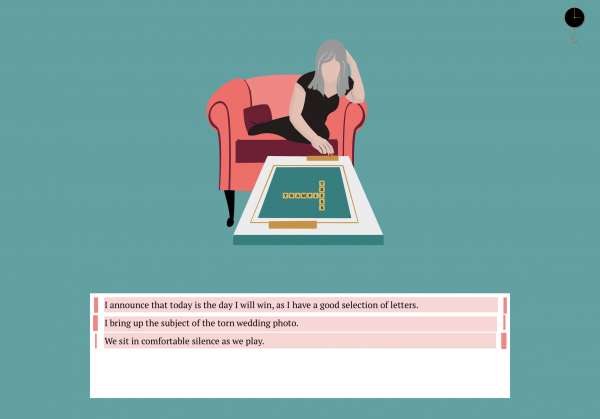
    We'll Always Have Paris tells the story of Simon, a retired chef living out his golden years trying to keep himself busy. One thing that occupies a lot of his time is Claire, his spouse of fifty years, who seems to experience episodes of dementia. In addition to tending to her, Simon has his social circle to keep up with and a young grandson to bond with.

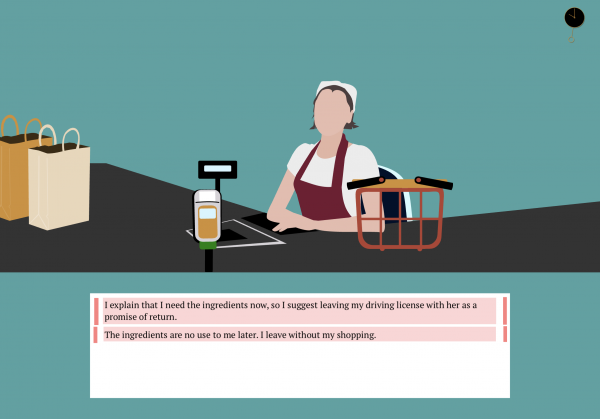
    Over the course of this game's one-day story, you help guide Simon through a set of errands and activities that stir up some bygone memories and tell you a little bit more about Simon and his life with Claire. Much of this narrative unfolds in a fairly linear fashion with you either buttoning through text prompts or performing some light environmental interactions like rubbing a foggy mirror with a towel or choosing groceries to buy as Simon's internal monologue and interactions with others drive the story forward.

    Beauty in brevity

    It's almost a challenge to break up We'll Always Have Paris into multiple play sessions. The game is intentionally easy to get through in a single sitting (as noted by a text box at the start of the game). Say what you will about the value proposition of games you can play through in less than an hour, but the amount development that occurs over Simon's seemingly ordinary day is perfectly paced and the primary reason the game feels cohesive and satisfying.

    We'll Always Have Paris is surprisingly efficient with its dialog and exposition. Small responses to questions or items in the scenery all play their part in building a fully realized world and past around Simon, and the sparse visual style and melancholy piano soundtrack all do their part to effectively set tone and make meaningful contributions to what ends up being a pretty emotional journey.
    Uncertain recognition

    The story in We'll Always Have Paris is its main selling point, and it's well worth the asking price. If you are looking for a game with more puzzle elements or even branching paths to explore, this is not the game for you. In fact, the worst moments in We'll Always Have Paris come whenever it tries to challenge you with environmental interactions.

    This is to say it isn't always entirely clear what kinds of actions We'll Always Have Paris wants you to do. Sometimes you need to tap items, and at others you need to drag them to certain places. This kind of inconsistency without instruction can lead to moments where you're correctly identifying the objects you need to use, but can't advance because you aren't putting the right kind of touch on it. These create points where you can stall out or otherwise slow the pace of a game that is very much interested in keeping you moving through it without much downtime.

    The bottom line

    We'll Always Have Paris is a wonderful story and experience that is able to delight, surprise, and move you in a remarkably short period of time. It doesn't always strike the balance it needs to between storytelling and interaction, but for the most part it lets you swiftly enjoy everything it has to offer.

    Source link:https://www.148apps.com/reviews/well-always-have-paris-review/
  • Knotwords review

    Zach Gage has made some of the best word games you can play on your phone, and what I'll confidently say is the absolute best logic puzzler you can find anywhere in Good Sudoku. Considering this, and perhaps the cultural phenomenon around the daily web challenge that is Wordle, it makes a lot of sense for Gage's latest work to combine wordplay with some placement mechanics in a way that feels like an evolution of the crossword puzzle into a form that honors logic over knowledge.

    Letter logic

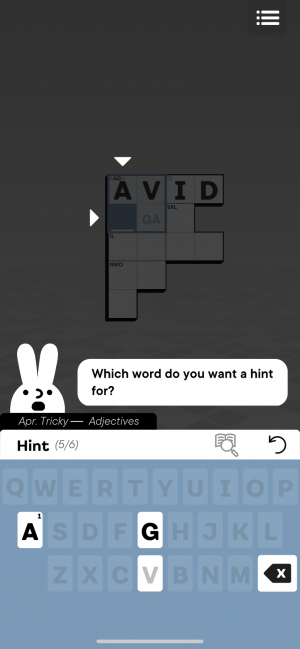
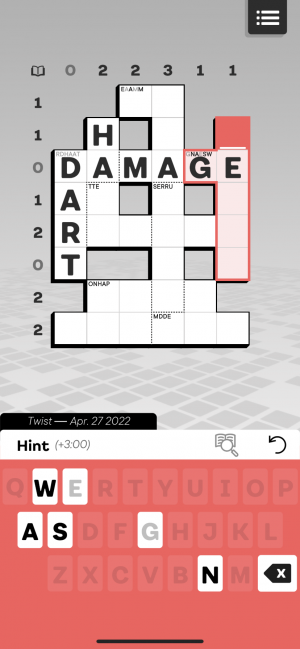
    Knotwords is a puzzle game with challenges that look awfully similar to crossword puzzles. A grid of intersecting blank boxes greets you at the start of every level, and it's your goal to fill every one of them in with a letter so that every string of two or more letters makes a valid word, both when reading across and down.

    Unlike crosswords, though, Knotwords gives you the letters you need for every box. Chunks of blank boxes are subdivided all over the puzzle board, and in the top left corner of those clusters is every letter you can use for those boxes. Depending on how these sections of boxes are divided, these letters could contribute to a single word, or multiple ones in various directions, and you won't know fully if you've used them correctly until you've played valid words in every direction in the puzzle, which is how you complete each challenge.

    Good guessing

    Completing Knotwords puzzles definitely involves a little bit of experimentation, but it is far from a pure guessing game or trial-and-error ordeal. The monthly puzzlebooks include clues about the word types you'll be solving for, there's a built-in hint system that can offer crossword-like definition prompts for individual words across or down, and by default the game gives very clear feedback by scribbling out words that are not valid and highlighting letters you use in clusters too many times.

    Even without any of these things (many of which you can turn off), the ways in which Knotwords subdivides its letter clusters and lays out its levels makes any error in word creation or letter arrangement something that is easy to identify within a small area of the level, which allows you to work on correcting mistakes without feeling lost or like you should just start the entire challenge over again from scratch.

    Fun for a spell

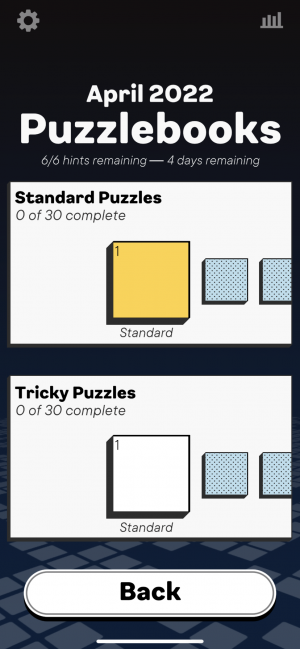
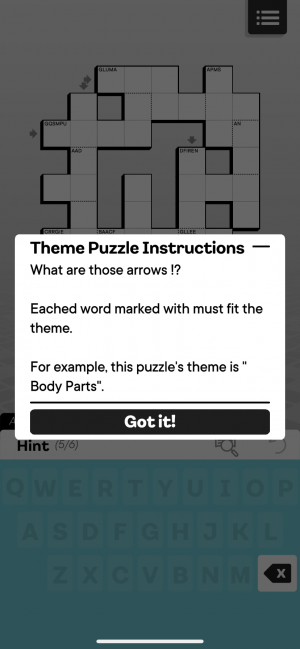
    In case the term “monthly puzzlebook” threw you for a loop in the previous section, let me finally explain Knotwords's structure. This is a game that is designed to be a daily exercise as opposed to being something completable. As a result, Knotwords features a variety of modes, though they are all meant to be followed and played over time. The monthly puzzlebooks are just that–a set of puzzles for the month that you can complete at your own pace, but change out every month. There are also two different daily challenges, one of which is a normal Knotwords puzzle and the other is a “Twist” mode that tells you how many vowels you can use in each row or column to complete the puzzle.

    Knotwords is a free game, but to unlock features like the Twist mode, additional puzzlebook challenges, a higher hint capacity, stat tracking, and additional color schemes, you can opt to pay $11.99 once or subscribe to the game for $4.99 per year. The game itself is perfectly enjoyable and offers exactly what it advertises without paying anything, so the purchase options feel more like ways to dive deeper into the experience rather than a way to make the game playable as intended.

    The bottom line

    For my money, I might sooner recommend some of Gage's other games ahead of Knotwords, but that's less a knock on this game as it is a testament to this developer's excellent body of work. The nice thing here is you don't have to actually spend anything to enjoy Knotwords at its core, so make sure to pick it up and give it a try.

    Source link:https://www.148apps.com/reviews/knotwords-review/